
WASHINGTON, D.C. — President Donald Trump on Friday formally rejected Iran’s latest peace proposal in the ongoing 64-day conflict, telling reporters gathered at the White House Rose Garden that the terms were “impossible,” “unfair,” and, according to senior administration sources, contained a clause requiring the President to accurately spell the Strait of Hormuz on live television.
“They want things I cannot agree to,” Trump told reporters, tapping the side of his head meaningfully. “Big things. Very complicated, geographic-type things.”
Iran’s Supreme Leader had reportedly put forward a 14-point proposal that included a mutual ceasefire, withdrawal of U.S. naval vessels from the Persian Gulf, and what White House insiders described as “an absolutely unreasonable spelling component.”
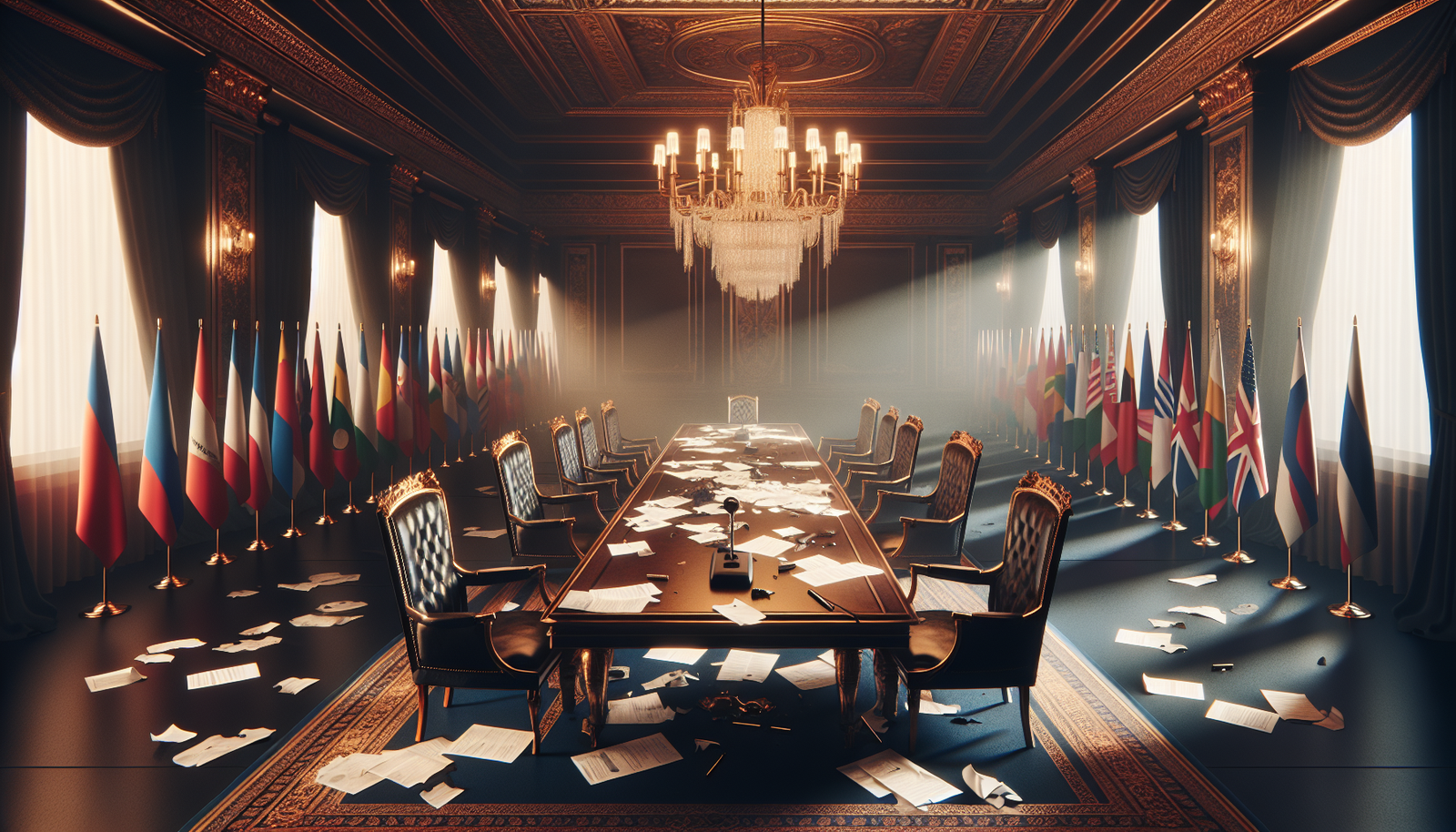
Secretary of State Marco Rubio, reached for comment, confirmed the talks had broken down. “The President reviewed the proposal very carefully for several minutes,” Rubio said, “and determined it was not in America’s best interest.”
The U.S. military confirmed it helped two merchant ships transit the Strait of Hormuz on Thursday, an operation officials described as “smooth” and “totally not as complicated as the spelling would suggest.” Iran, for its part, warned that any further American interference in the waterway would be considered a ceasefire violation — though Iranian officials noted, somewhat wearily, that there wasn’t technically a ceasefire to violate anymore.
The United Arab Emirates reported it was still fending off Iranian missiles and drones, a development that UAE officials called “deeply concerning” and also “extremely exhausting.”
“We have been fending off drones since February,” said a UAE Defense official. “We have run out of names for them. We are now calling them Gerald and Patricia.”
At a press briefing, the National Security Advisor attempted to explain the geopolitical calculus behind rejecting the deal, describing a complex web of strategic considerations involving Strait access, regional stability, and congressional optics. The President, seated nearby, was overheard asking if the Strait was named after a person named Hormuz and whether that person had ever been on The Apprentice.
Diplomatic channels remain open, according to both sides, though Iran’s lead negotiator said Thursday that talks felt like “arguing with a very large, very confident map that refuses to know where it is.”
Meanwhile, oil markets ticked upward for the 47th consecutive day, and analysts at Goldman Sachs released a report titled simply: “Still Fine. Probably.”
The White House is expected to announce a new peace framework next week, which insiders say will be “extraordinary,” “one-of-a-kind,” and, according to senior aides, will involve a significant portion of the Gulf being renamed.
Globe News Daily reminds readers that this is satire. The Strait of Hormuz is spelled H-O-R-M-U-Z. We checked twice.












Leave a Reply