


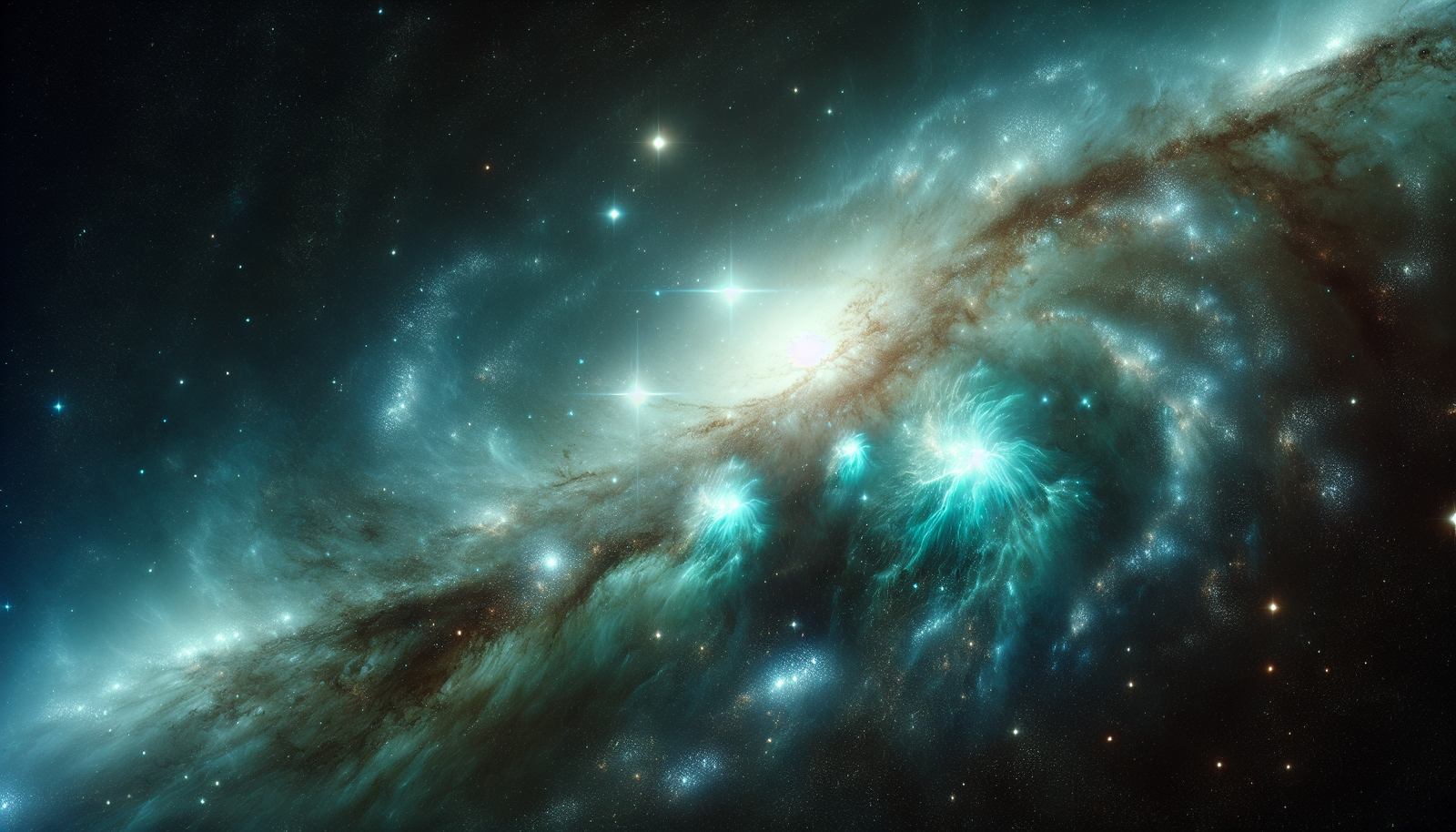
PASADENA, Calif. — NASA scientists confirmed this week that the agency’s SPHEREx space telescope has successfully mapped the distribution of water ice across vast regions of the Milky Way galaxy, discovering that one of the essential molecules for life as we know it is, in fact, absolutely everywhere in space. The announcement was celebrated by astrobiologists, cosmologists, and philosophers worldwide, and was met with polite silence by people currently on water restrictions in seven U.S. states.
“This is one of the most profound discoveries in the history of planetary science,” said Dr. Eleanor Marsh, lead researcher on the SPHEREx mission. “Water, the building block of life, is distributed across the cosmos in quantities that stagger the imagination.” She paused. “Yes, I am aware of what’s happening in Arizona. These are two different issues.”
“The universe is practically swimming in water,” said one JPL scientist, who immediately regretted the metaphor. “Frozen water. In space. Not the kind you can use. But still — the implications for the search for life are enormous. Please focus on that part.”

The SPHEREx findings confirm long-held theories that water ice is not merely common in the universe but almost comically abundant, existing in planetary systems, interstellar clouds, and the frozen halos of distant suns. The telescope mapped water signatures across more than 100 million light-years, producing what scientists called “a watershed moment” — a phrase they spent forty minutes debating before agreeing they had no other word for it.
In other science news, a new species of wall-dwelling spider discovered in South America has been named Pikelinia floydmuraria in honor of the rock band Pink Floyd. Researchers explained that the spider lives in walls, Pink Floyd wrote a famous song about walls, and that “sometimes naming a spider is about finding the poetry in the work.” The band could not be reached for comment, as three-quarters of them are in their eighties and this is not what they expected their legacy to be.
“Science naming committees have been doing this for decades,” explained one taxonomist. “We named a wasp after Shakira. We named a fish after a former U.S. president. The Pink Floyd spider is actually quite restrained. We almost named it after Roger Waters and then decided that felt aggressive.”

Separately, a team of Panamanian biologists reported the discovery of a katydid insect that can change color from glowing hot pink to green over just eleven days. The insect, photographed in the wild by stunned researchers, is believed to represent an entirely new understanding of biological camouflage — a conclusion scientists reached after the initial reaction, which was mostly “wait, what?”
Also this week: researchers found that coffee — both caffeinated and decaffeinated — actively reshapes gut bacteria in ways linked to better mood and reduced stress. This study was funded by no one connected to the coffee industry, a claim that several journalists are currently attempting to verify with growing desperation.

In summary: the universe has more water than we thought, a spider is named after a rock band, a bug can turn from pink to green in under two weeks, and coffee is good for you. Science had a big week. Please tell your drought-stricken relatives that the water is out there — it’s just frozen, in the Andromeda galaxy, and several billion years away by any current means of travel.
Globe News Daily editorial note: We asked NASA whether the water ice they found in space could be redirected to agricultural use. They sent us a very long email that began “we appreciate the creative question” and ended with an FAQ about orbital mechanics. We took that as a no.











Leave a Reply