

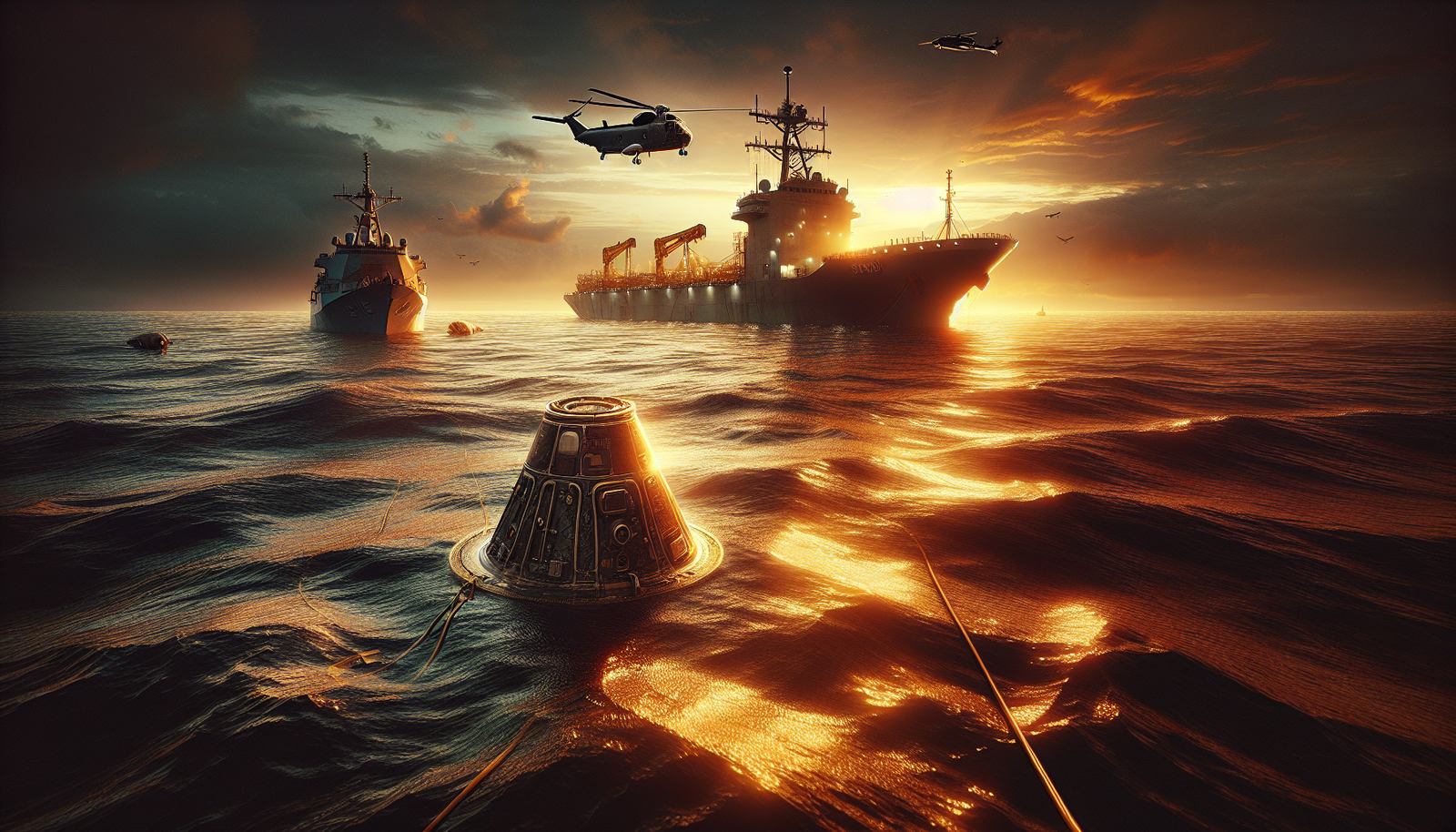
PACIFIC OCEAN — The four-person crew of NASA’s Artemis II mission splashed down in the Pacific Ocean this week following a historic journey around the Moon, breaking Apollo 13’s record for the farthest distance ever traveled from Earth by humans at 252,756 miles. The astronauts reported that the Moon is, as suspected, still there and has not moved.
The crew spent several days looping around the lunar surface in a trajectory that allowed them to observe the Moon up close before returning to Earth, where they were greeted by recovery teams, cameras, and an ocean that, by all accounts, was also still there and had also not moved.
“We are incredibly proud of what this crew accomplished,” said NASA Administrator Dr. Felicity Barns at a press conference held aboard the recovery vessel. “They traveled farther from Earth than any humans in over fifty years, and they brought back something more valuable than moon rocks.” She paused dramatically. “A sense of wonder.” Another pause. “We did not actually bring back moon rocks. That’s Artemis III’s job.”
“It was profound,” said mission commander Sharon Alvarez after emerging from the capsule looking both exhausted and vaguely annoyed that she had to talk to people immediately. “You look back at Earth from that distance and everything seems so small and fragile and temporary. Then you splash into the ocean and someone hands you a protein bar and the feeling mostly goes away.”
The Artemis II mission marks a significant milestone in NASA’s broader plan to eventually land humans back on the Moon, establish a permanent lunar presence, and at some unspecified future point do something about Mars. The mission also broke Apollo 13’s distance record — a record that Apollo 13, it should be noted, set entirely by accident while attempting not to explode, which gives the new achievement a slightly different emotional texture.
Scientists were quick to enumerate what the mission confirmed about the Moon’s composition, gravitational influence, and surface conditions, though members of the public who followed the mission were primarily interested in whether the astronauts got good photos and what the food was like. (Photos: excellent. Food: described as “acceptable, with the exception of the Tuesday pasta.”)
“We learned a tremendous amount,” said mission specialist Dr. Otto Park. “We also confirmed that space is extremely large and mostly empty, which I think we all suspected, but it’s good to have verified in person.”
The crew will now undergo several weeks of physical rehabilitation, debrief sessions, and carefully managed media appearances before, NASA says, “getting back on the horse” — a phrase that mission planners acknowledge is slightly uncomfortable given that the horse is a rocket that goes to the Moon.
Globe News Daily editorial note: Our space correspondent attempted to reach the Moon for comment. The Moon did not respond. This is consistent with prior reporting.







Leave a Reply