

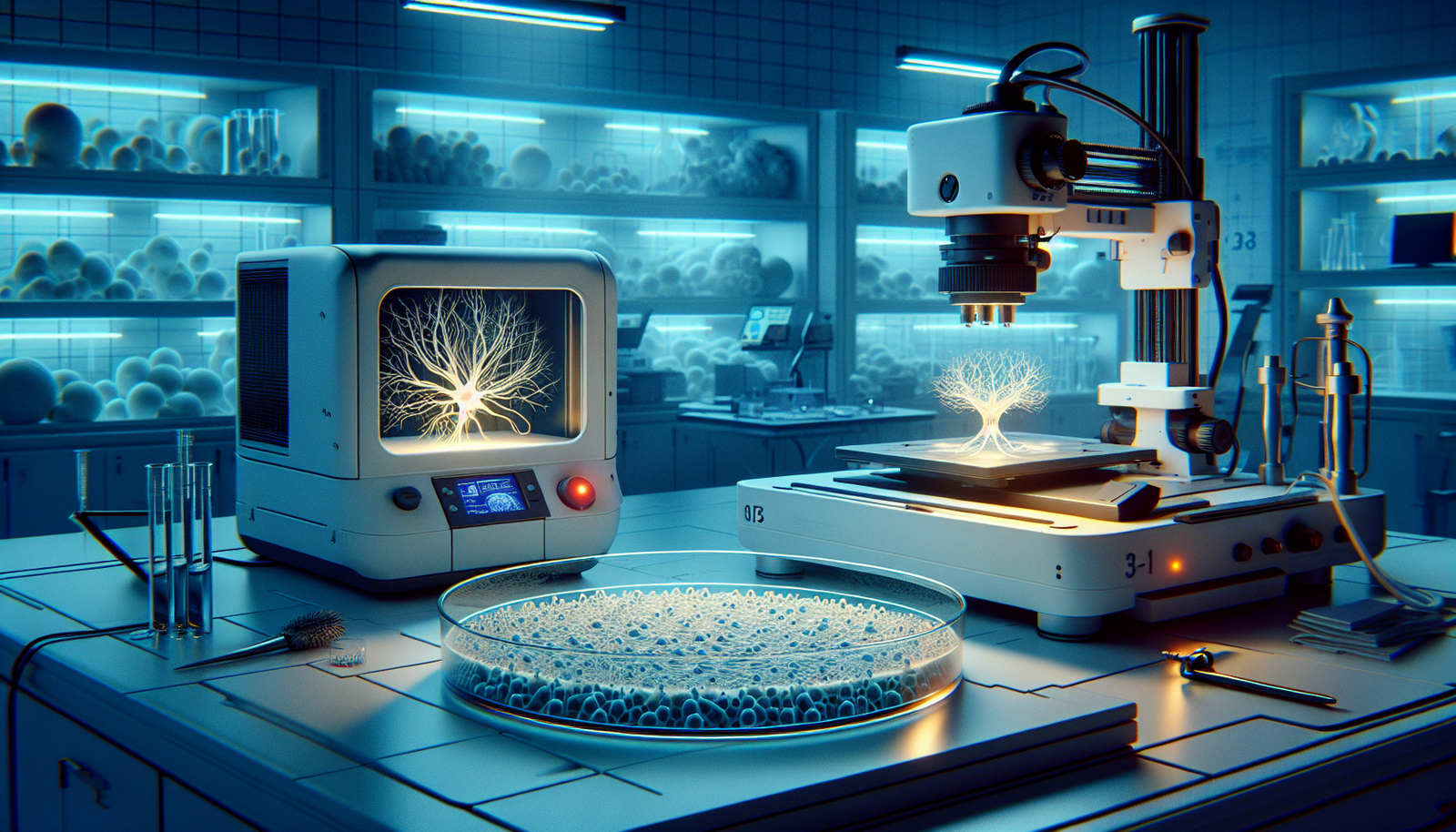
EVANSTON, Ill. — In a development scientists are calling “a stunning leap toward merging machines with the human brain” and everyone else is calling “a lot to process on a Tuesday,” engineers at Northwestern University have successfully 3D-printed artificial neurons capable of communicating directly with real, biological brain cells.
The synthetic neurons, described in a paper published this week, can exchange electrochemical signals with their organic counterparts in what researchers characterize as “natural conversation” and what the brain cells themselves have declined to comment on.
“We’re not saying the artificial neurons are smart. We’re saying they can talk to the neurons that are smart. It’s like putting a very convincing chatbot next to your actual thoughts.” — Dr. Patricia Wrenfield, lead researcher, moments before her own neurons began experiencing an existential crisis
The breakthrough is being hailed as a potential revolution in treating neurological conditions such as Parkinson’s disease, spinal cord injuries, and the persistent inability to remember where you left your keys. Scientists say the artificial neurons could one day be implanted to restore damaged neural pathways, essentially upgrading the brain the way one might update a software driver — except the driver controls whether you can move your arm.
Early trials found that the biological neurons, when introduced to their synthetic counterparts, initially showed some resistance before “settling in,” which scientists describe as normal synaptic adaptation and philosophers describe as “already a metaphor for something.”
Not everyone is celebrating. Dr. Howard Finkelbaum, a neuroscientist at MIT who was not involved in the study but has opinions about everything, warned that the line between “augmentation” and “replacement” is thinner than people might assume.
“Today it’s a few printed cells helping an injured spine. Tomorrow it’s a printed frontal lobe telling you to buy a different brand of cereal. I’m not saying that’s bad. I’m just saying read the ingredients.” — Dr. Howard Finkelbaum, who has been saying versions of this at conferences since 2019
The artificial neurons are reportedly indistinguishable from natural ones under a microscope, a fact that researchers consider a triumph of engineering and that philosophy undergraduates everywhere are calling “the assignment.”
Asked when human trials might begin, the research team said “several years,” which, based on the pace of recent AI and biotech announcements, likely means eighteen months.
The printed neurons are currently housed at Northwestern’s lab, where they are reportedly getting along well with their biological neighbors, occasionally firing in sync, and displaying no signs of wanting to take over. So far.
Globe News Daily editorial note: Our science editor asked his own neurons what they thought of artificial neurons. They said they needed a moment. It has now been three hours.











Leave a Reply