


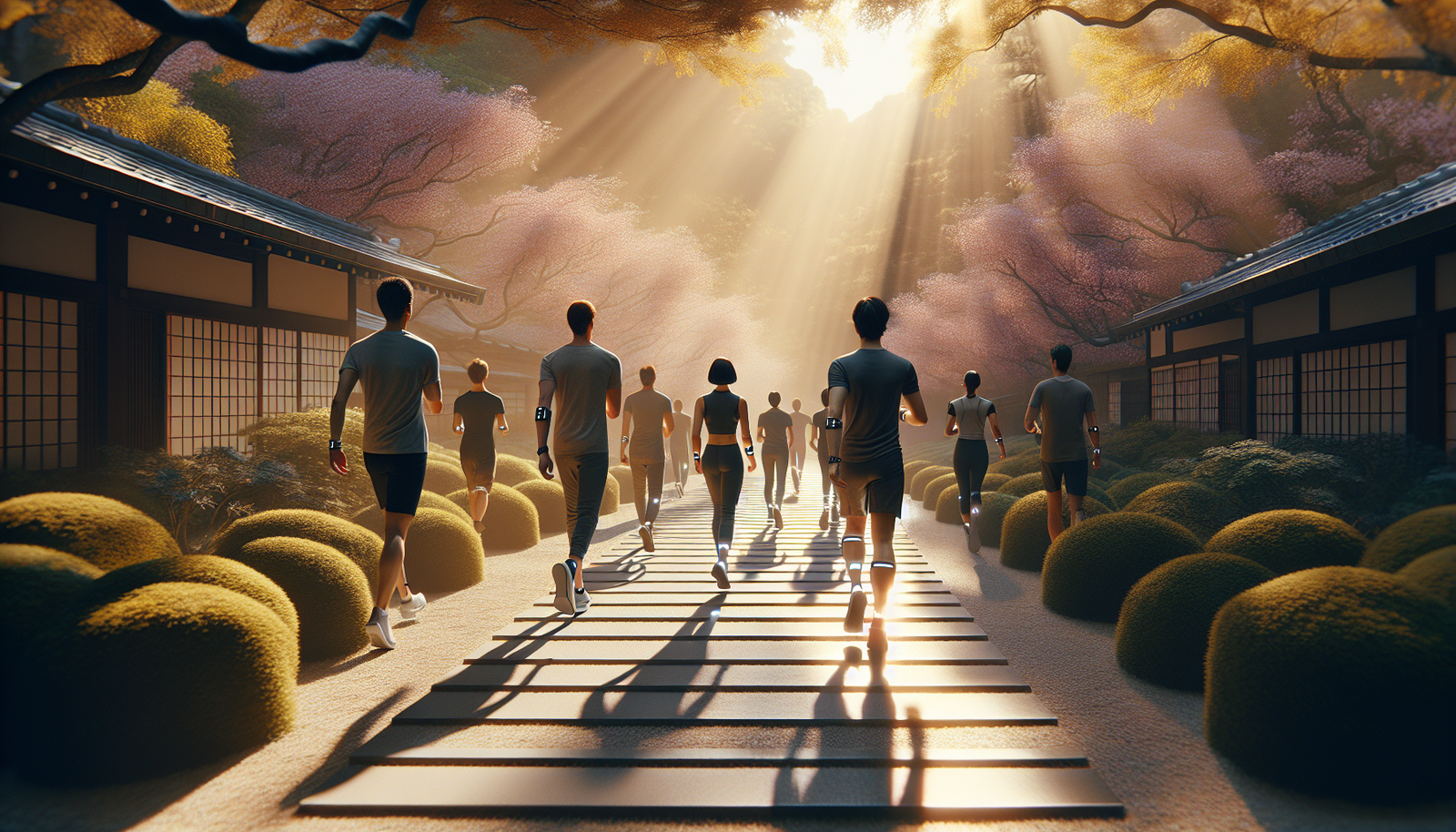
TOKYO / LOS ANGELES — The global fitness industry is reeling this week from the meteoric rise of “Japanese walking,” a technique involving three minutes of brisk walking alternated with three minutes of slow walking, which has surged 2,986% in search interest over the past year — making it the fastest-growing fitness trend in the world, and also the thing you have been doing every time you were late for the bus.
The method, formally known as “interval walking training” and developed by Japanese researchers at Shinshu University, has genuine clinical backing: studies have shown that alternating walking speeds increases aerobic fitness, lowers blood pressure, and improves muscle strength more effectively than walking at a single pace. None of this is new. What is new is that someone posted a video about it in English, it appeared on a morning show, and 47 million people immediately downloaded a new app to track it.
“Japanese walking has been practiced in Japan for over fifteen years. We are delighted that the rest of the world has discovered it. We are less delighted that it is now being sold as a premium subscription service.” — Dr. Hiroshi Tanaka, Shinshu University, who developed the original research and makes approximately no money from the app
The walking trend arrives as Pilates completes its third consecutive year as the most-booked workout globally, a reign so complete that fitness studios in major cities are now simply renaming themselves “the Pilates place,” because that is what every studio has effectively become. Pilates bookings rose 66% since 2024, a figure analysts attribute to the fact that it is effective, accessible, and can be done while looking contemplative, which photographs well.
The American College of Sports Medicine’s annual fitness trend report meanwhile confirmed that wearable technology has reclaimed the top spot for 2026, meaning that millions of people are now strapping AI-powered devices to their wrists to tell them to walk more — a function previously performed by doctors, parents, and the general concept of going outside.
“Recovery is trending. Cold plunges are up. Infrared saunas are booked solid through autumn. What people want in 2026 is to work out intensely for forty minutes, then spend the rest of the day recovering from working out. We consider this progress.” — Jennifer Coldwater, wellness industry analyst and owner of three infrared saunas
Mental fitness has also emerged as a major category, with consumers investing in “nervous system regulation” through breathwork, meditation, cold exposure, and devices that purport to balance the autonomic nervous system via vibration — all of which are primarily marketed using the phrase “science-backed,” which, experts note, covers a wide range of scientific enthusiasm.
The fitness industry as a whole is expected to grow significantly in 2026, driven by the twin engines of people who want to live longer and people who want to post about living longer. Analysts say these groups overlap substantially.
As for Japanese walking: practitioners are advised to simply walk fast for three minutes, then walk slow for three minutes, for thirty minutes total, three times a week. No equipment required. The app, however, is $9.99 a month, and includes a leaderboard.
Globe News Daily editorial note: Our fitness correspondent has been Japanese walking around the office for two hours. She’s fine. She has lapped the deputy editor four times. He was walking normally, which is apparently now called ‘legacy gait.’













Leave a Reply